Achievements
In his 1998 interview with Robin Hughes, Charles Perkins states that the ATSIC was “all good thinking along good principles, and the concept was good too, but the mechanics of it, getting it set up, as with the Native Title Act, they didn't think it out well enough”. It's undoing was the details of how it would be run and even as the Head of Aboriginal Affairs, Charles “was never consulted on any of it in terms of what the mechanics of the ATSIC legalisation”.
"Never intellectualise further than you can emotionally carry people"
-Charles Perkins
Evaluation
Whilst Charles Perkins was the head of the Department of Aboriginal Affairs, the Aboriginal and Torres Strait Islander Commission was introduced. While the ATSIC had good ideas and intentions at its core, it wasn't managed effectively resulting in its ultimate downfall. The lack of discussion with Charles Perkins on the set up of the commission shows this fact and may also allude to discrimination still present in Parliament at the time. Despite this, it did help achieve some good in including Indigenous people into political discussions, creating a national voice for Aborigines that was independent from the Government, initiating appropriate programs for assistance, regionalism, communication and working together between States and Territories, and special arrangements for Torres Strait Islanders. The later investigation into the corruption of the Aboriginal and Torres Strait Islander Commission, lead to the decision of its abolishment on the 14th of March, 2005. This shows the poor assembling and maintenance of a commission meant to help Indigenous Australians but ultimately letting them down. In conclusion, while the ATSIC had some successes it was an establishment doomed to fail from the start.
By 1967, the Foundation for Aboriginal Affairs had numbers exceeding 400 using the foundation’s extensive services. Near the conclusion of the decade, Aboriginal executives pushed to take control of the organisation and in 1973 there was finally an all-black management. However, once this happened, all financial support from the broader community stopped. This resulted in the organisation closingin 1975.
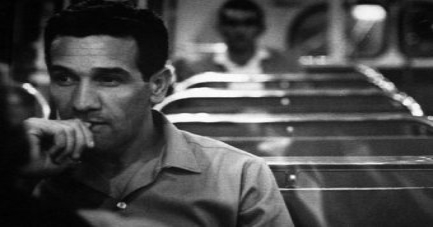
Charles Perkins was one of the people involved in the creation of the Foundation for Aboriginal Affairs as a means of assisting Aboriginal people moving to Sydney to find jobs and housing. The Foundation for Aboriginal Affairs worked wonders and had great motives behind their work. Whilst it was solely political, the views of it's activist founders comes through on various occasions. However, this was not detrimental to the foundation but allowed for the generation of pride among Indigenous Australians in their culture. Chicka Dixon stated "it taught people to stand up and be counted … to be proud to be Aboriginal". It is very much a shame that when the management became all Indigenous Australians that the support from society stopped and the fact that this also occurred in other organisations that underwent similar changes is an appalling display of discrimination.
The Freedom Riders gain wide spread publicity on their quest. Darce Cassidy, one of Perkins’ fellow students on the Freedom Ride was a part-time reporter for the Australian Broadcasting Commission. He filmed their trip and sent the brutal and ugly confrontations of the towns, especially ones like Moree and Walgett destroying the ‘perfect’ images Australia had of their country. Charles flew to Sydney to take part in a debate with the Shire Clerk of Walgett on Four Corners and the newspapers of Australia were following the story. Charles Perkins also delivered an address at the Easter conference of the Federal Council for the Advancement of Aborigines and Torres Strait Islanders (FCAATSI), speaking to over 200 people at Canberra about the issue of Aboriginal discrimination in Australia.
The Freedom Rides were exceptionally successful due to the wide spread coverage it received. The prominence of the Ride as well as some of the Freedom Riders; Charles Perkins being one, in the media contributed to its success in bringing the racial issues of country towns into the lime light. While it didn't end discrimination, it made its presence known to the previously oblivious Australians.
Following the broadcasting of the Freedom Riders visit and protests in Moree, it came under increasing public pressure to lift the 40 year ban preventing Aborigines from using their pool that had been present since the day it was made. The council eventually relented and lifted the ban but reinstated it after the Freedom Riders left. However, the decision was appealed and the ban was lifted permanently.
This is another example showing the positive impacts of the Freedom Riders in bringing about the support of Australians on an issue they were once ignorant to. To get the Council of Moree to lift the 40 year ban was great to begin with, but being able to make them lift the ban permanently is a monumental achievement. This would never have received the support it did if it weren't for the publicity received through the media and Charles Perkins' appearances on it.
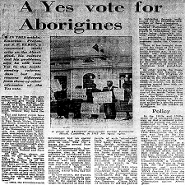
Charles Perkins was a major force in the 1967 referendum that included Aborigines as Australian citizens, granting them the rights of full Australians and allowing them an unprecedented amount of rights. Perkins, joined by his organisation, the Foundation for Aboriginal Affairs,advocated incessantly for the “yes” vote that would mark a major mile stone for all Indigenous people. His efforts contributed to the most successful referendum in Australian history with a 90.77% of people voting in favour.
With the strong campaigning from Charles Perkins and his organisation, the referendum was a rewarding success that was long overdue in Australian society. His contributions led to the best referendum results in recorded Australian history, displaying just how greatly Australians were on board with these changes. From not many knowing the reality of Aboriginal treatment, to a 90.77% "yes" vote, it alludes also to just how far Perkins came in publicising the discrimination facing Indigenous Australians and convincing the Australian populace to help make a well needed change to their treatment and the laws.
Website References:
- Foundation for Aboriginal Affairs. Collaborating for Indigenous Rights. Retrieved 1 September 2016, from http://indigenousrights.net.au/organisations/pagination/foundation_for_aboriginal_affairs
- Pollock, Z. (2008). Foundation for Aboriginal Affairs. Dictionary of Sydney. Retrieved 1 September 2016, from http://www.dictionaryofsydney.org/entry/foundation_for_aboriginal_affairs
- Sanders, W. ATSIC's Achievements and Strengths: Implications for Institutional Reform. Centre for Aboriginal Economic Policy Research - Australian National University. Retrieved 30 August 2016, from http://caepr.anu.edu.au/Publications/topical/2004TI10.php
Interview Reference:
- Perkins, C. (1998). Australian Biography, Full Interview - Charles Perkins. Retrieved 1 September 2016, from http://www.australianbiography.gov.au/subjects/perkins/intertext9.html
Picture References:
- Curthoys, A. (2010). Freedom Ride: A journey to fight racial discrimination. Australian Geographic. Retrieved 30 August 2016, from http://www.australiangeographic.com.au/topics/history-culture/2010/05/freedom-ride-a-journey-to-fight-racial-discrimination/
- The Sydney Morning Herald,. (1967). A Yes Vote for Aborigines. Retrieved from http://www.nfsa.gov.au/digitallearning/mabo/info/aYeasVoteForAb.htm
By Jasmine Wormleaton.
